|
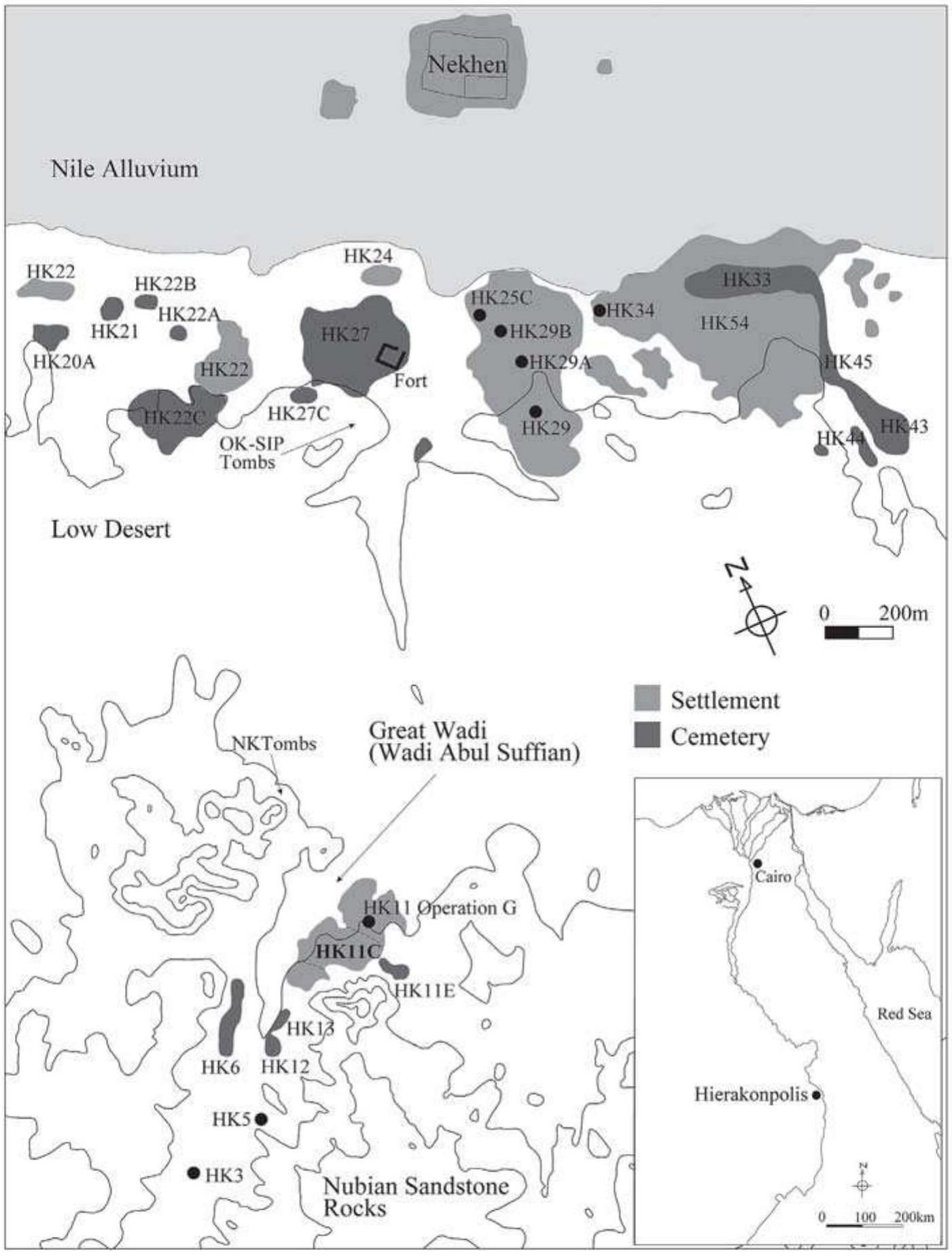
| Map of Hierakonpolis |
The elite cemetery (HK6) at Hierakonpolis served as a burial ground restricted to the elite. The elite cemetery was in use in the Naqada IC-IIB period (3800-3650BC), but was abandoned in Naqada IIC-D (3600-3300BC). HK6 is unique for the number and variety of domestic and wild animals that were interred, singly or in groups, often in graves of their own, but some also accompany human burials. Radiocarbon dates on two of these animals, an elephant (Tomb 33) and an aurochs (Tomb 19), indicate that both were buried at the same time : at some point between 3660 and 3640 BC. Two seeds of Hyoscyamus cf muticus (Egyptian henbane) were identified in the gut content of the Tomb 19 aurochs.
 |
Most of the pathologies observed on the wild animals at HK6 are healed fractures resulting from violent blows, and a smaller proportion seems to be related to tethering of the hartebeest, young hippo and aurochs. Remnants of the rope around its neck of the aurochs (Tomb 56) were also observed on the mat lining the base of the tomb. These conditions indicate that the animals were held in captivity for a prolonged period of time after their capture.
In the Naqada IIC period new cemeteries were established on former settlement area along the edge of the flood plain at HK27 (Fort Cemetery), HK31 (Painted Tomb Cemetery) and HK33.
In the Naqada III period the elite cemetery (HK6) came into use again.
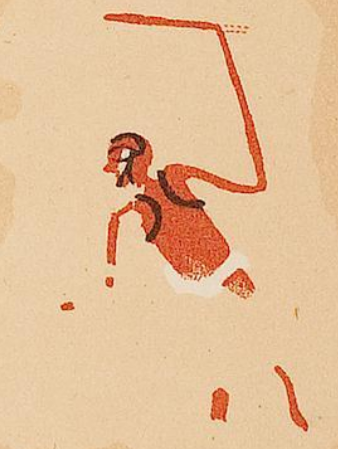 |
| An attacker holding up his stick |
Wall painting from Tomb 100 at Hierakonpolis, ca. 3500-3200 BC
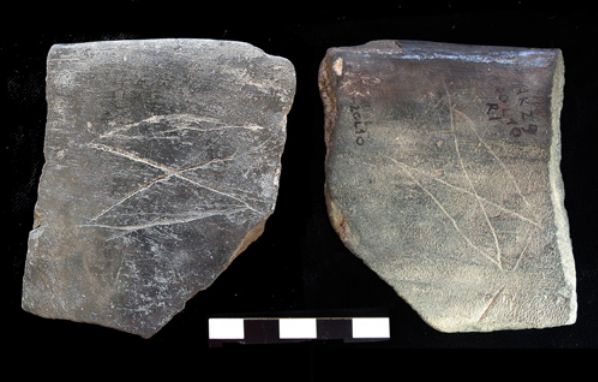 |
| Ostracon incised on both sides from HK29 at Hierakonpolis |
 |
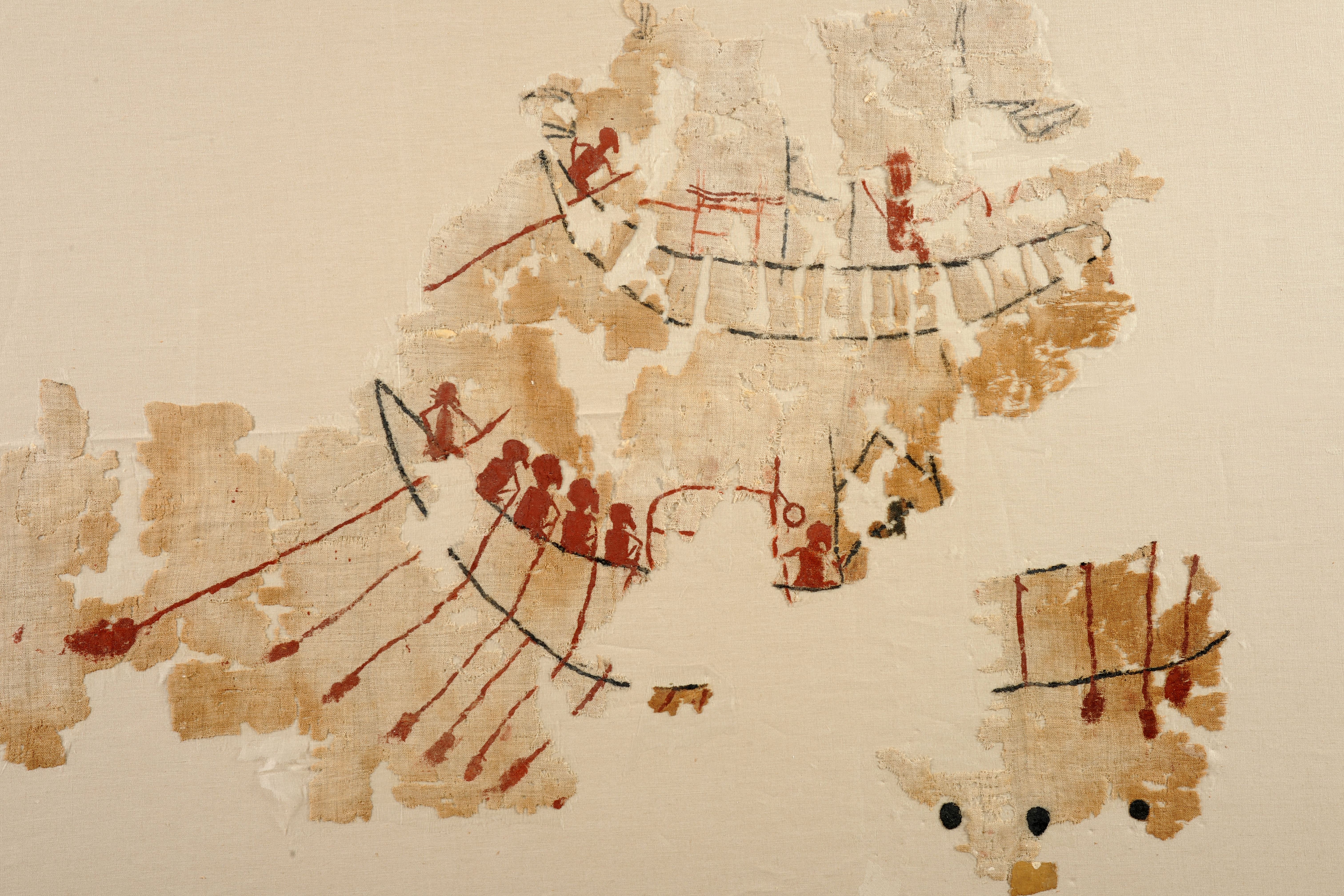 |
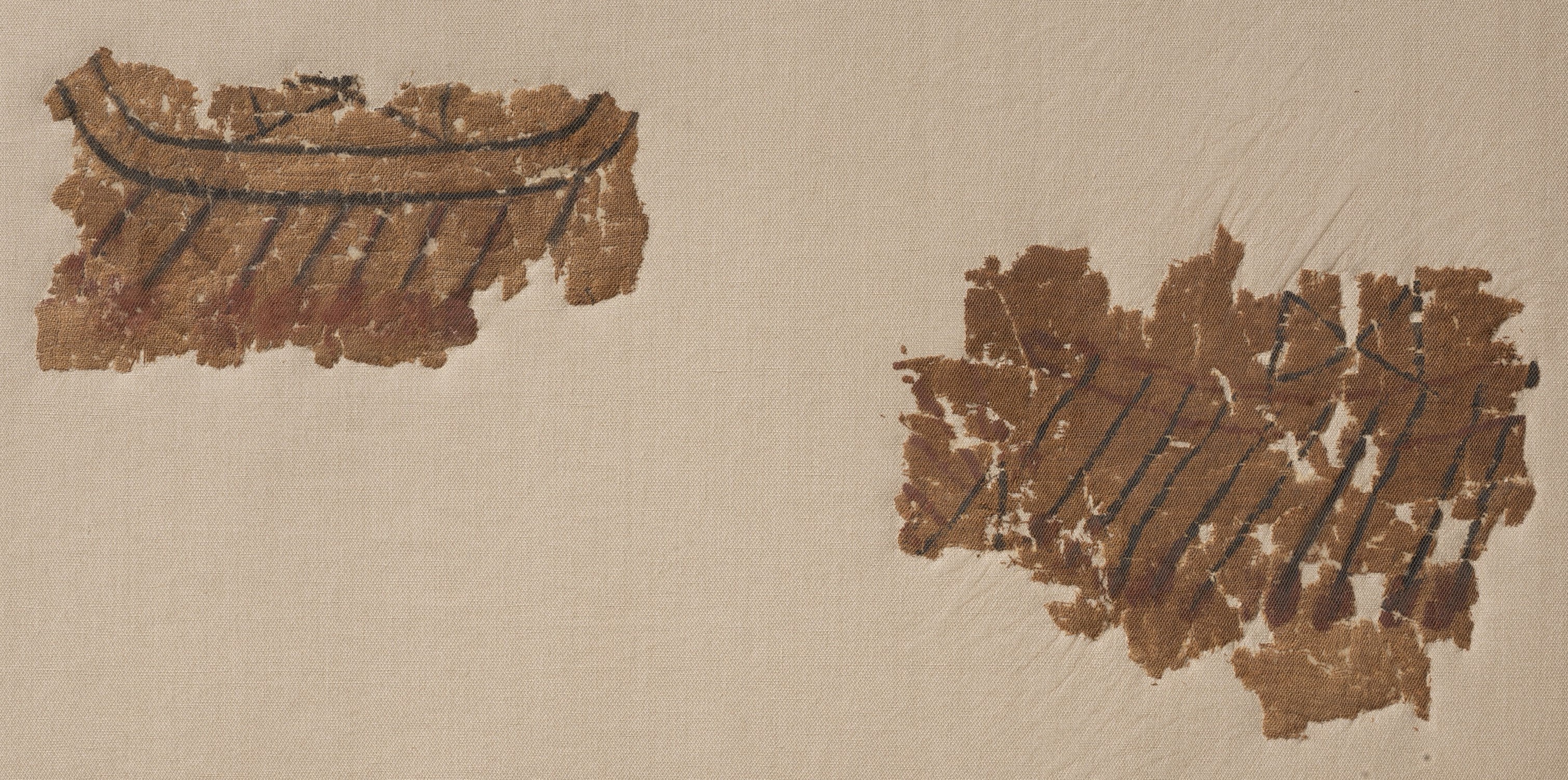
| Gebelein painted linen, Gebelein, ca. 3600 BC |
 |
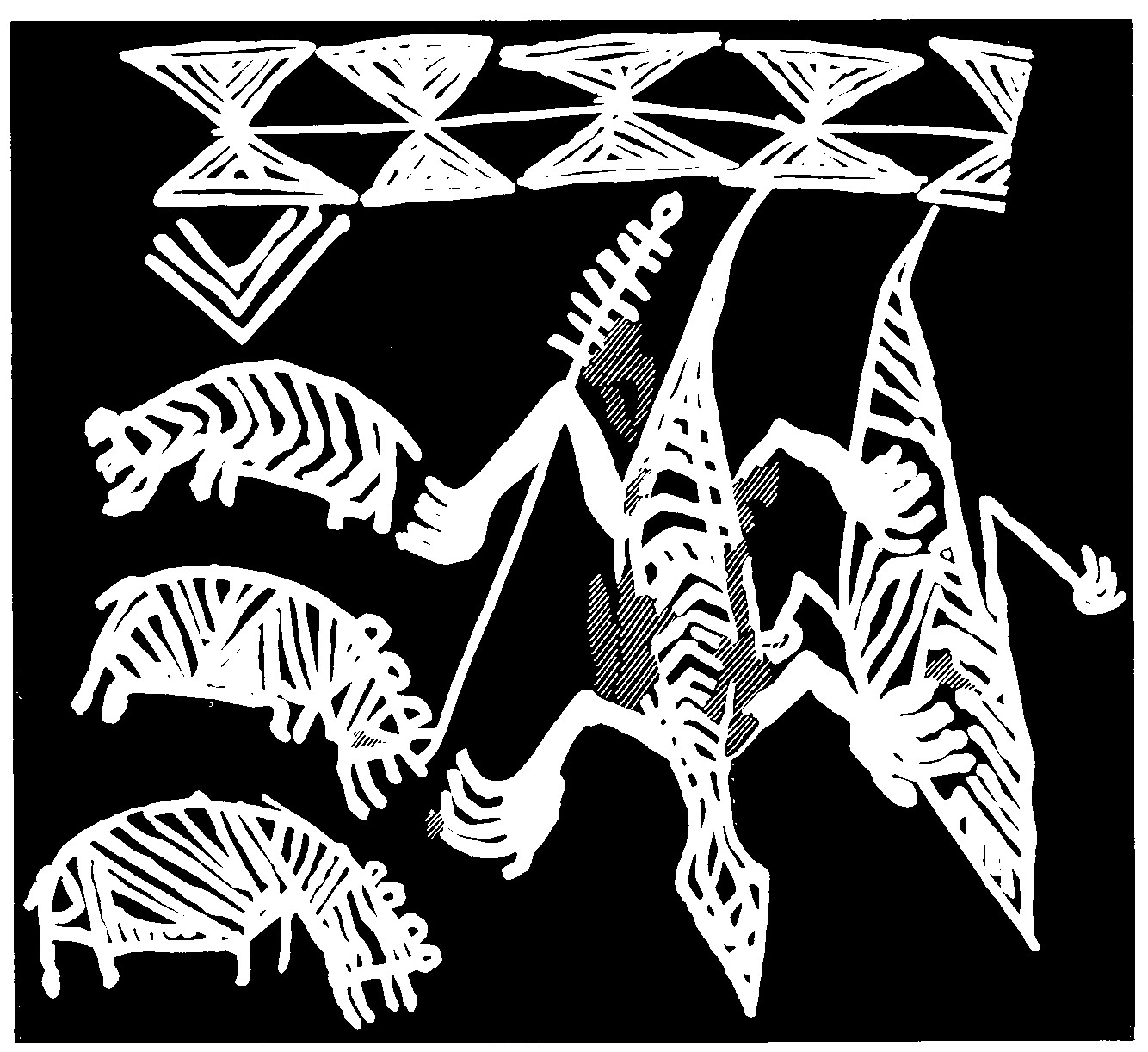 |
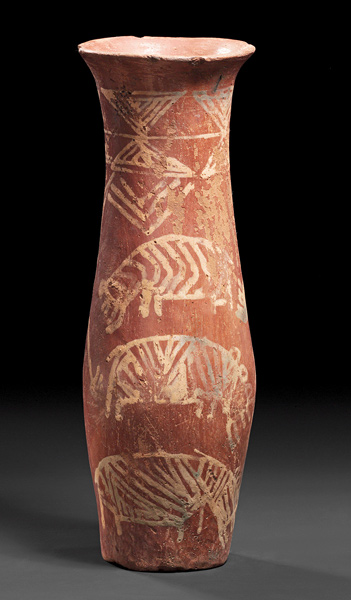
| C-Ware bottle, Gebelein (?), Naqada IA-IIB period | Crocodile attacking one of three hippopotami and the shadow in the Nile River |
Two hippos fighting against the crocodile while one hippo fleeing in panic
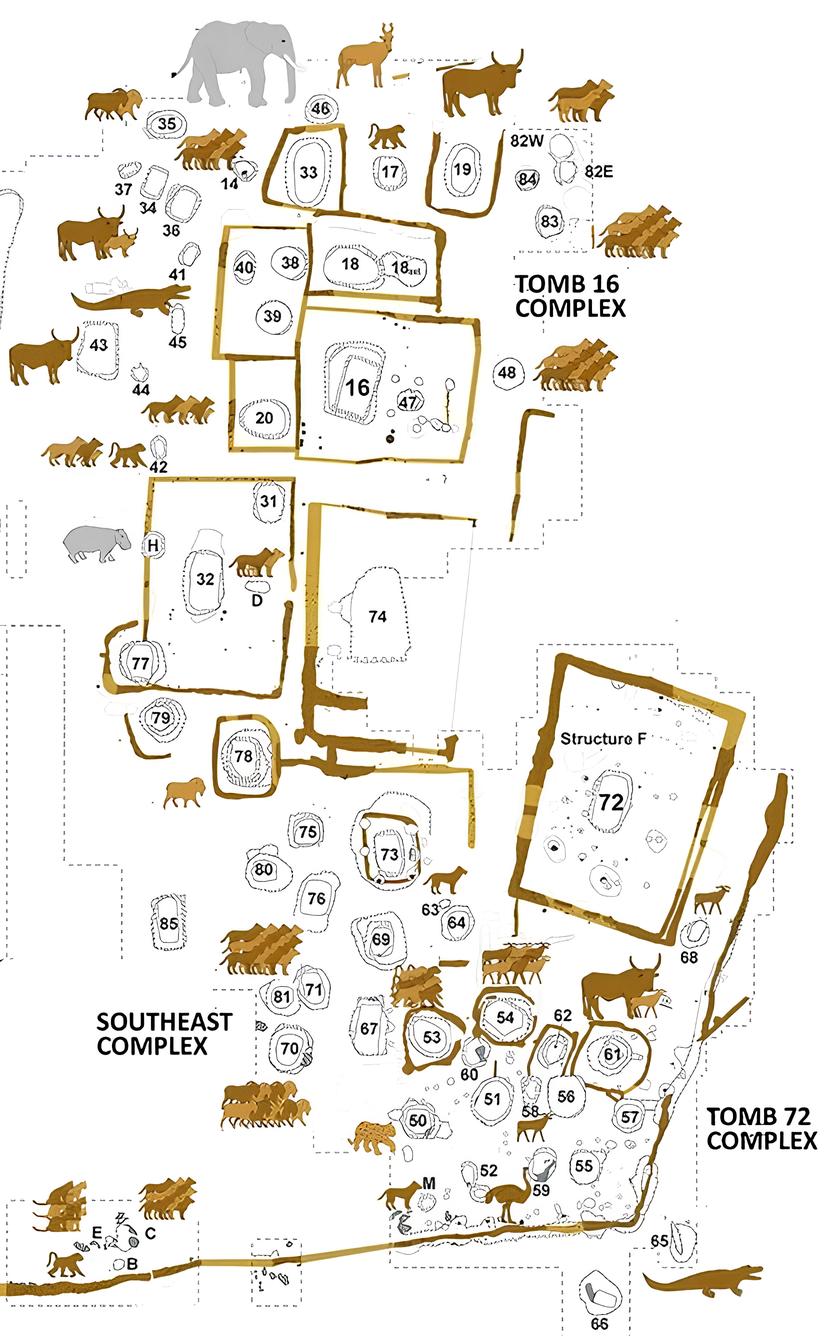 |
| Map of the central part of HK6 (the elite cemetery) at Hierakonpolis |
HK6 Tomb 72 is estimated to have been the last tomb around which a large-scale interment of many animals took place.
HK6 Tomb 72 is set within a large wooden structure (Structure F). The body of Tomb 72 owner was highly disturbed. Bones of a young person, 17-20 years of age, were found scattered in the upper fill and surrounding areas. Only some fingers and a part of the pelvis were found on the floor of the tomb. The majority of the objects date the tomb to the Naqada IIA-B period, roughly 3700-3600 BC.
The almost complete removal of the human bones from the floor of the tomb, while many objects were left in place, suggests that the grave had been violated soon after the owner's death. This seems to have been an act of aggression against the tomb owner, rather than merely robbery. The wooden building above the tomb was then burnt down, along with other posts within Structure F.
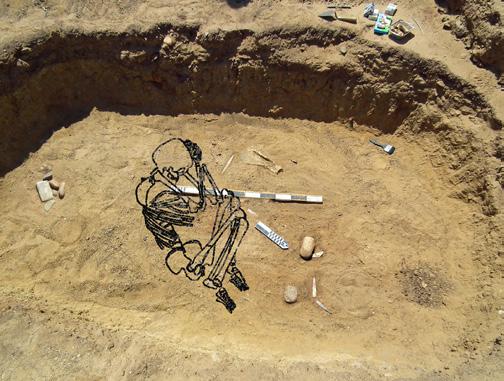 |
| HK6 Tomb 72 with a reconstruction of the original placement of the owner's body |
 |
| Combs from HK6 Tomb 72 |
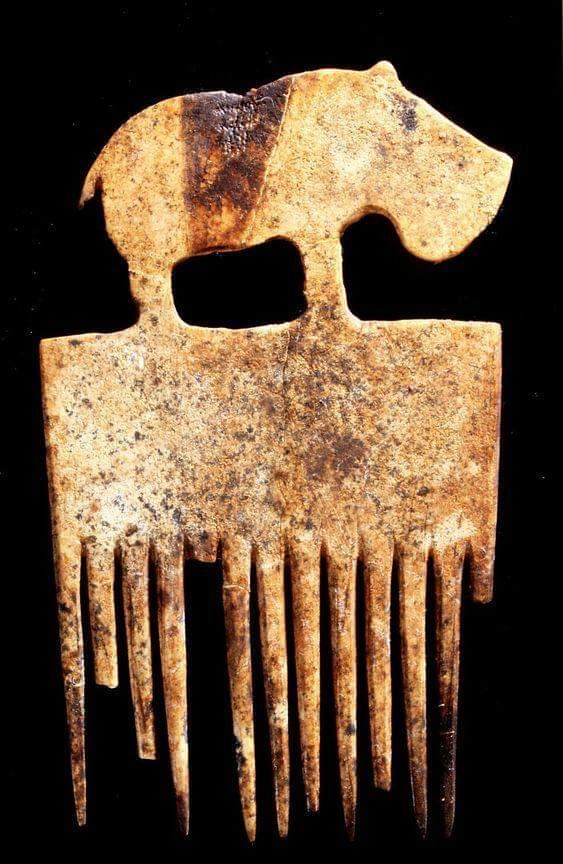 |
| "Hippo" comb from HK6 Tomb 72 |
A spot on the top of the hippo figure’s back seems to have been intentionally burnt. This comb was found just above the remains of the tomb owner’s pelvis.
 |
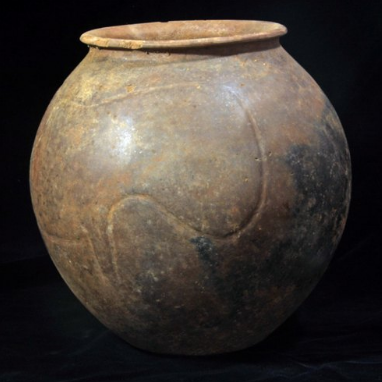 |
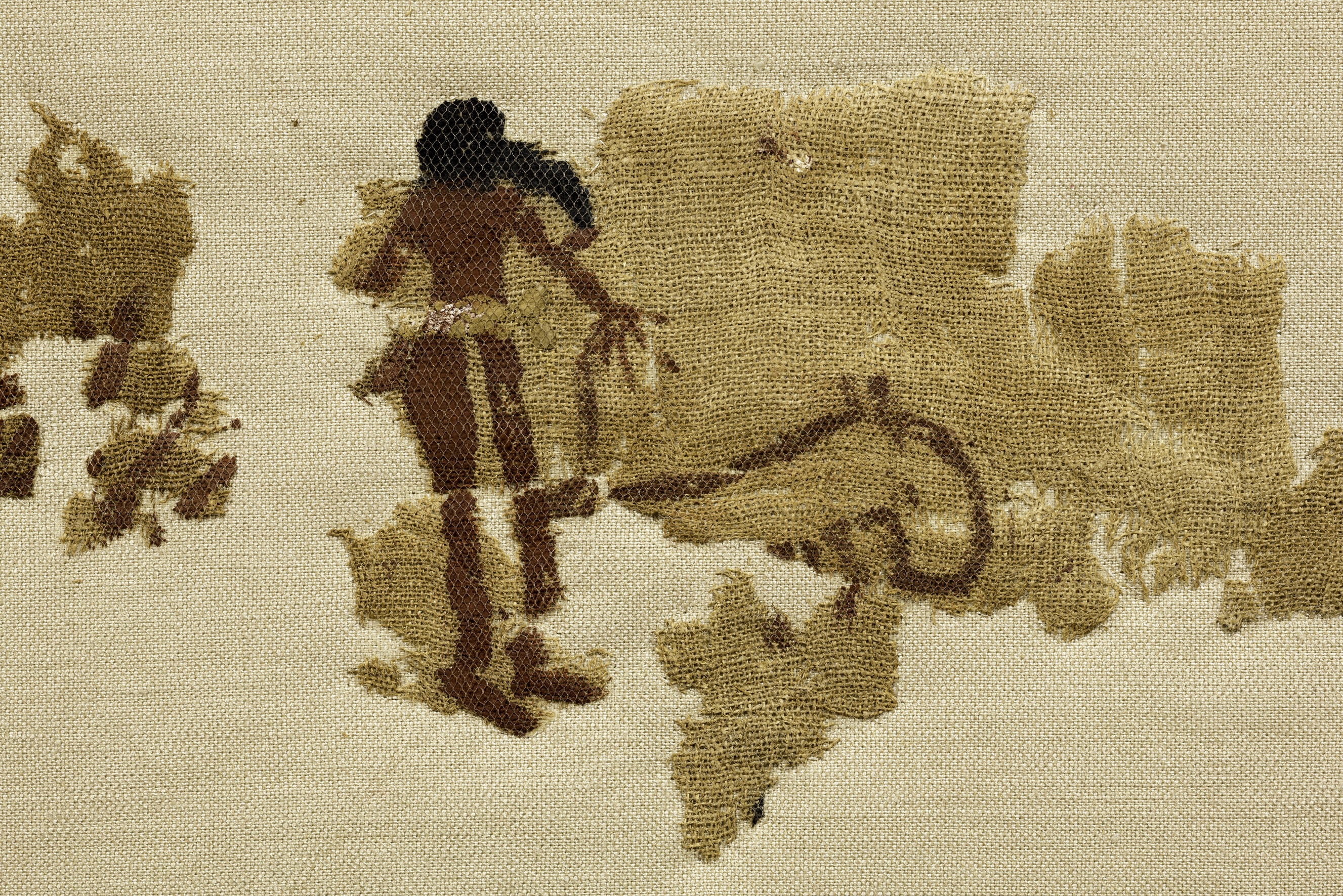
| Long-haired man standing with a leashed young hippo on Gebelein painted linen | Pot from HK6 Tomb 72, Naqada IIB period |
A juvenile hippopotamus was found at HK6 Feature H. A healed fracture was found on the lower right fibula of the young hippo, likely resulting from being constrained by a rope above the ankle joint. Unlike a hippo between 6 and 12 months of age from Tomb 12, which must have died from starvation without its mother, the hippo from Feature H was capable of surviving longer. This is indicated by a pathology showing that the young hippo was indeed, for a rather long time, under human control.
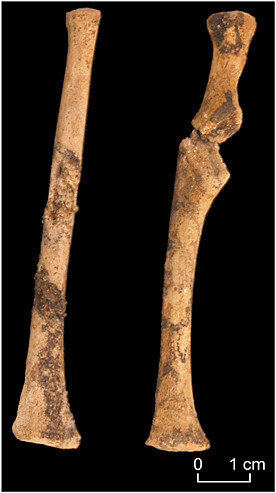 |
| The hippopotamus calf from Feature H: the intact left fibula and the healed right fibula |
HK6 Tomb 32, dated to the Naqada IIA-B period, contained the skeletal remains of as many as eight individuals, two or possibly three of whom had been exposed to fire. Based on isolated cranial fragments, the cremated remains appear to belong to a male and a female. A third individual is represented by a non-adult hand bone (a first metacarpal), sex indeterminate. Discoloration of the fragments in black and reddish brown hues is consistent with heat exposure within the 200–600˚C range. There was no indication of fire within the tomb itself. Tombs 31–32 and the fence surrounding them are later additions that were not initially part of the Tomb 16 complex.
To the north of Tomb 32, a shallow pit contained the remains of two dogs (Feature D), and to the south, a deeper pit held the disturbed remains of a juvenile hippopotamus (Feature H).
HK6 Tomb 77 contained the highly disturbed remains of a robust man, aged between 35 and 50 years, who had a healed compress fracture on the front part of his skull. Fragments of two large beakers were all that remained of his grave goods. Tomb 77 predates the enclosure around Tombs 31-32. In fact, the south wall of the enclosure cuts through Tomb 77.
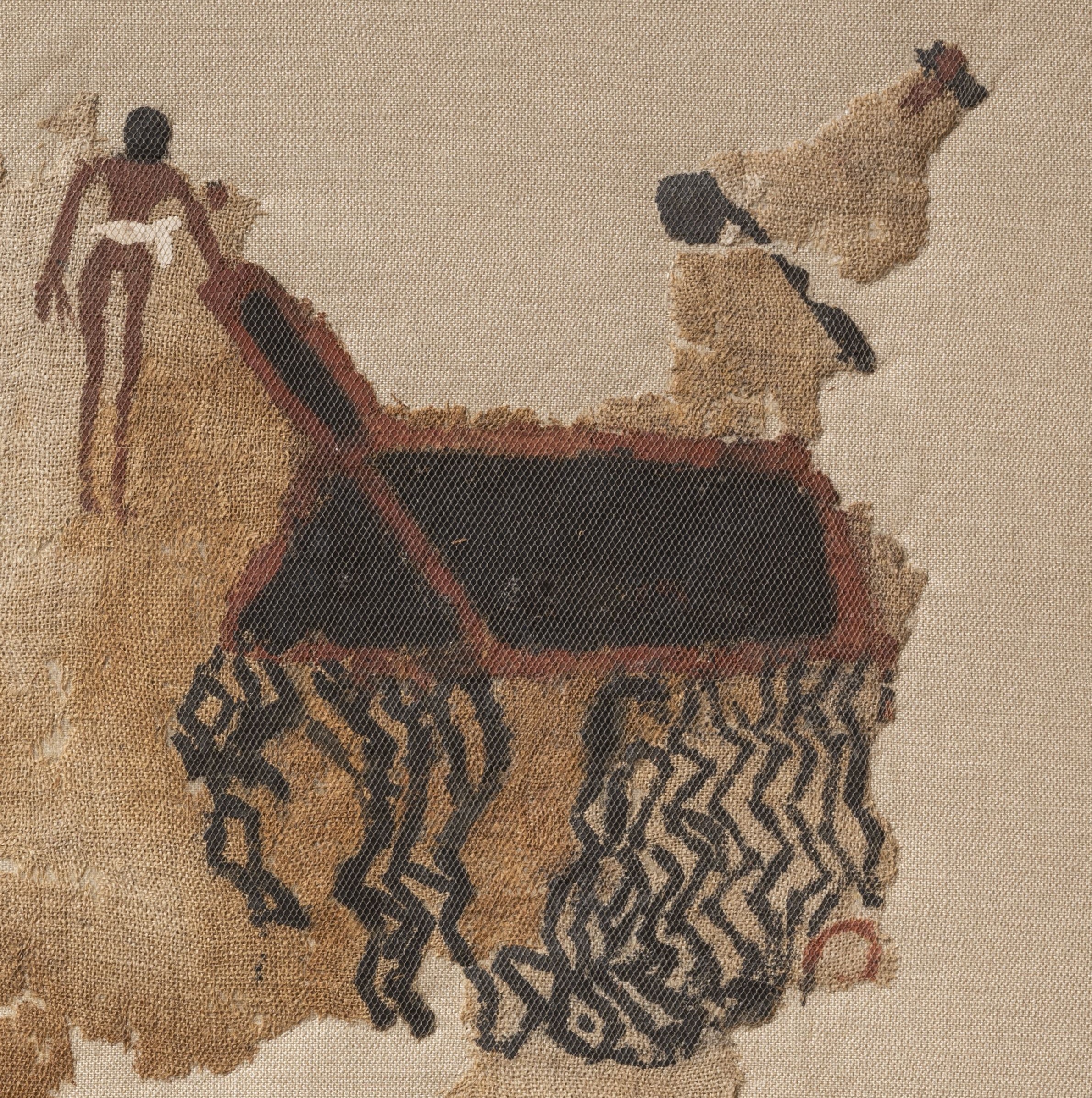 |
| A man standing outside a house and a stick with a rounded end (?) |
Gebelein painted linen, Gebelein
The burned house at HK29 in Hierakonpolis features one (once mud, now burnt) brick near the entrance that had been decorated with wavy lines made by the maker’s fingers.
The settlement cluster HK29/29A is the burned house and workshop of a potter. The evidence suggests that one day, the flames from his pottery kiln, located just over 5m away, spread to the house and burned it to the ground. The remnants of foundation trenches for post and reed walls of additional buildings and animal pens as well as the eroded (unburnt) remains of other sunken floor structures surround the house, but some may date to earlier or later phases of occupation. Several phases of habitation were observed, so that even after the fire, the area was not abandoned.
There must have been an attack on Hierakonpolis by Gebelein at some point between 3700 and 3650 BC.
Later, during the Naqada IIB period, the elite cemetery (HK6) at Hierakonpolis was severely violated. The emblematic example of this violent targeting is Tomb 72, whereas Tomb 23 shows signs of having been usurped and adapted for a different cultic purpose.
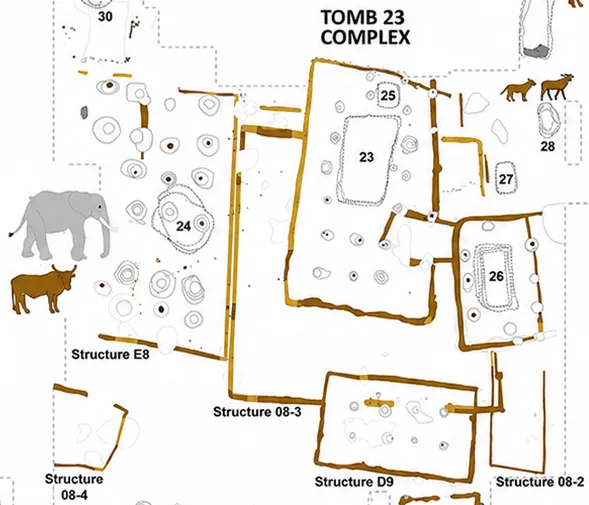 |
| Tomb 23 in the elite cemetery (HK6) |
References:
http://www.hierakonpolis-online.org/index.php/nekhen-news
https://digi.ub.uni-heidelberg.de/diglit/quibell1902bd2/0100/image,info
https://collezioni.museoegizio.it/en-GB/material/S_17138
https://ponda.org/object/C-0096
https://www.researchgate.net/publication/272754645_Traumatism_in_the_Wild_Animals_Kept_and_Offered_at_Predynastic_Hierakonpolis_Upper_Egypt
November 19, 2024 Takahiko Nakagawa