|
|
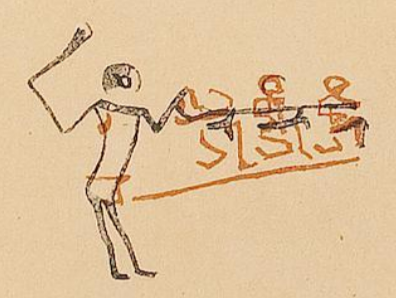
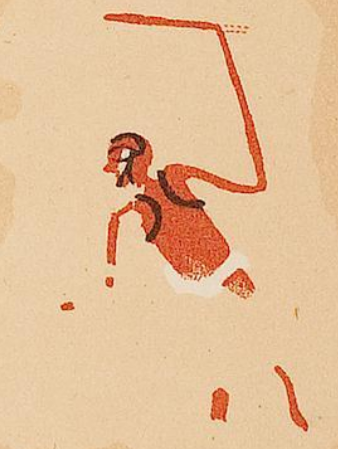
| The executioner | The attacker |
|
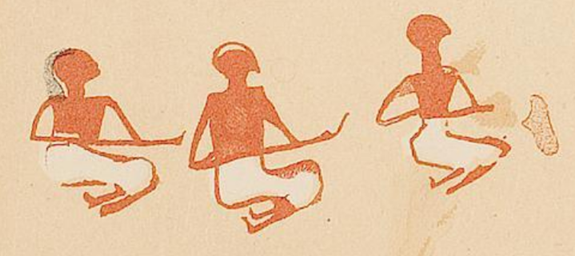 |
Three captives
 |
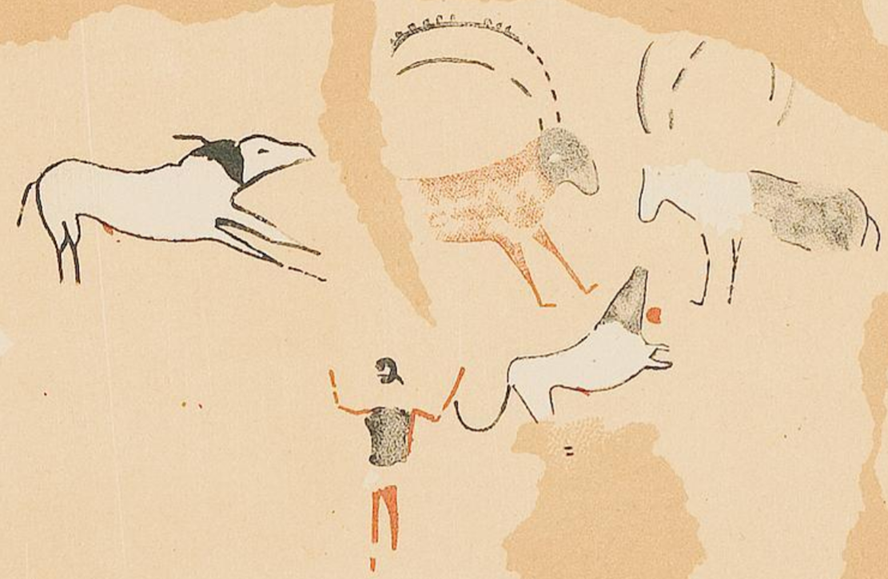 |
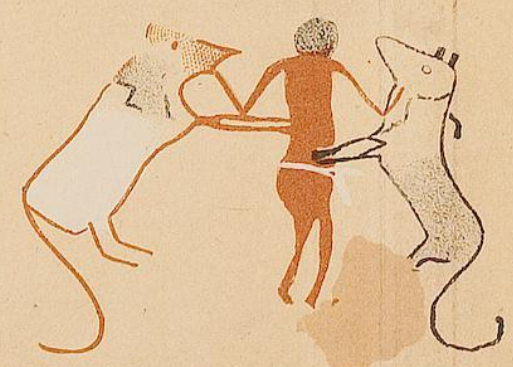
A retreating figure and one dog on each side
Wall painting from Tomb 100 at Hierakonpolis, ca. 3500-3200 BC
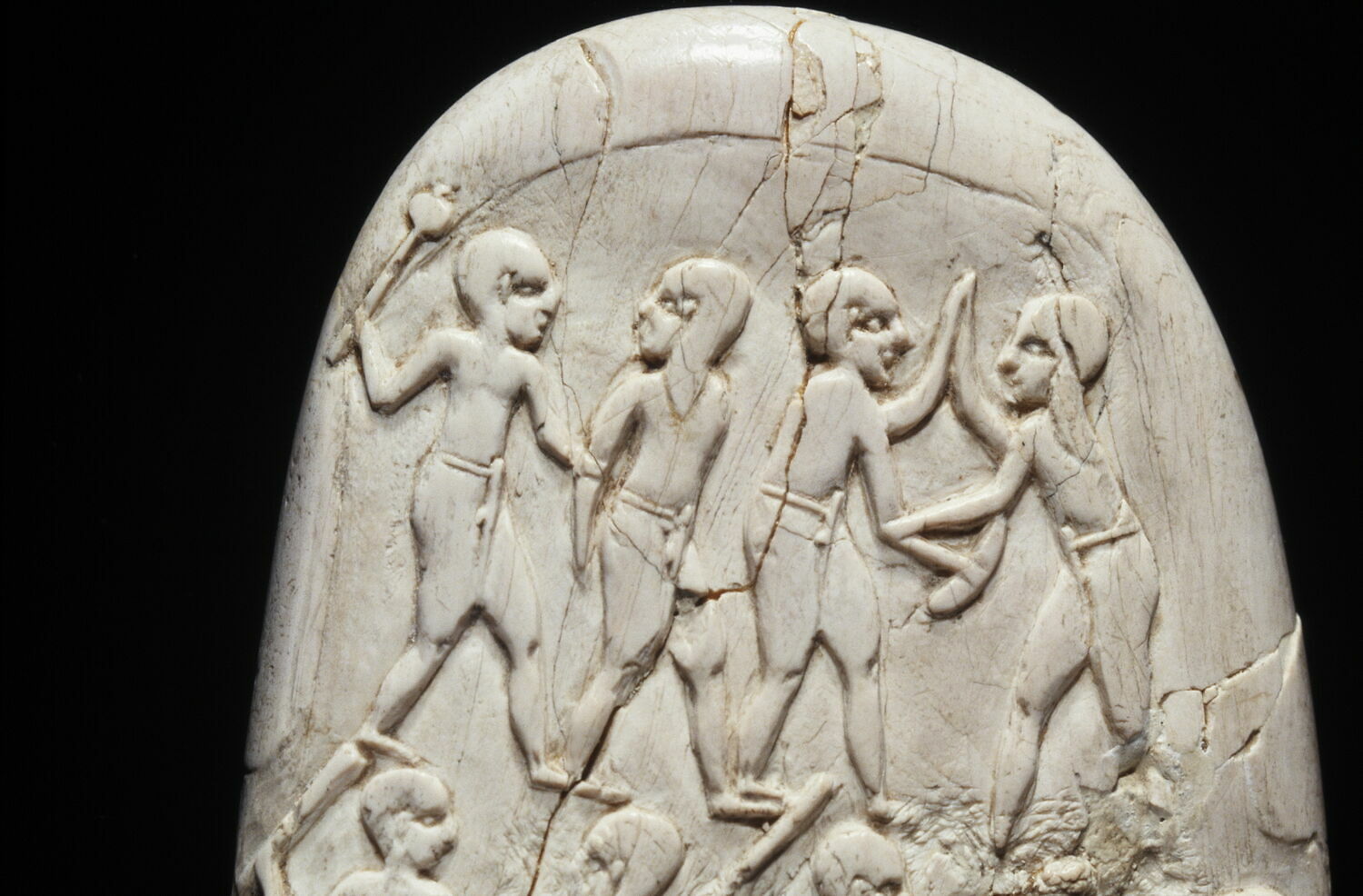 |
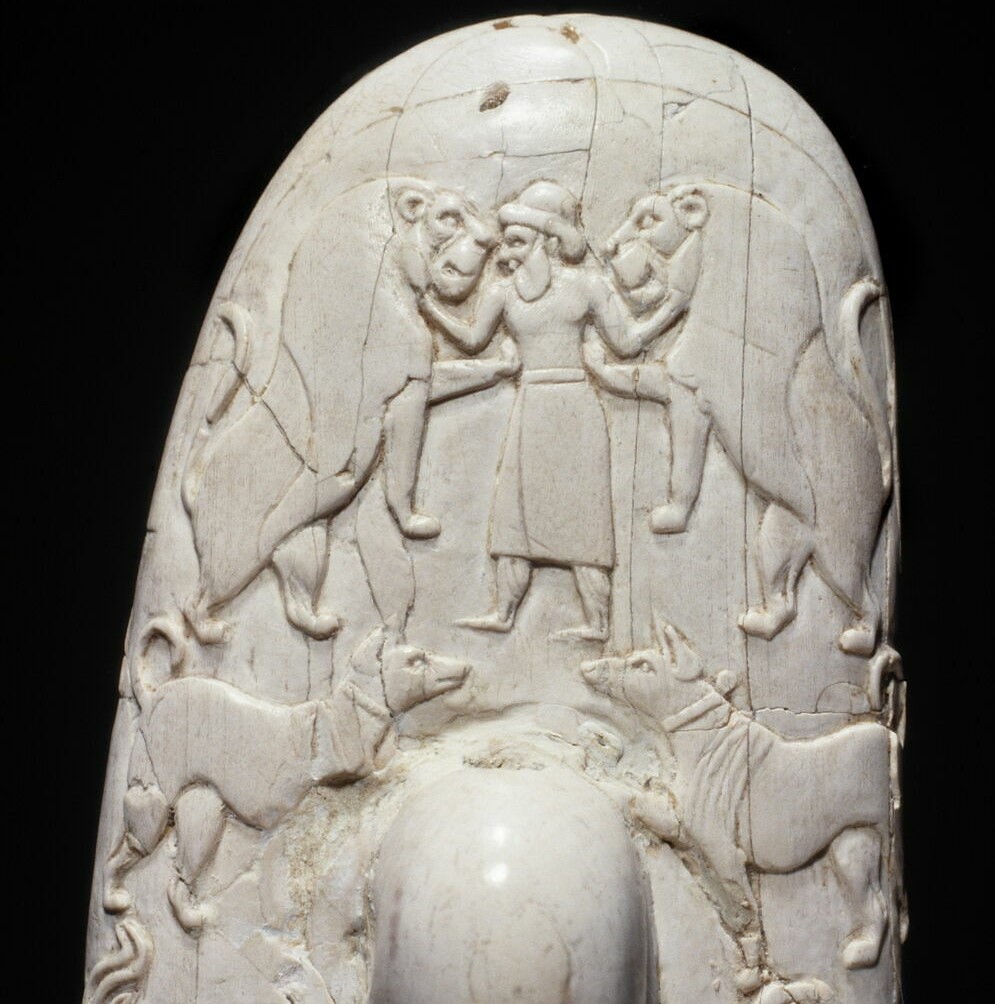
| Gebel el-Arak Knife (front), Gebel el-Arak (?), ca. 3600-3300 BC |
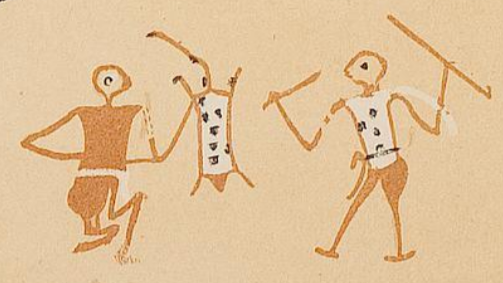 |
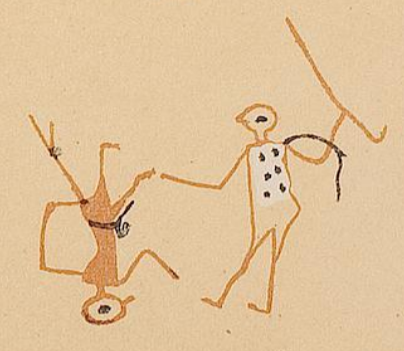 |
Wall painting from Tomb 100 at Hierakonpolis
 |
|
| Only the dog on the right has the "strap" at the back of its neck | The figure between two dogs |
| (body facing forward) | (retreating figure) |
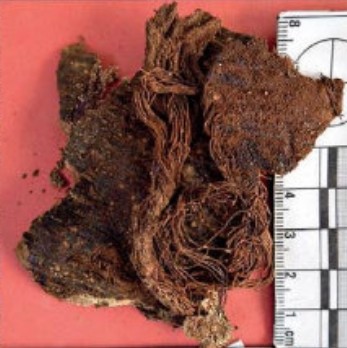 |
| Fringed textile found in the pelvic region of the human male buried in Tomb 52 at HK6 (the elite cemetery) |
The large 20–25-year-old male was buried in HK6 Tomb 52. Pads of resin-soaked linen up to 3cm thick were also recovered from the tomb fill.
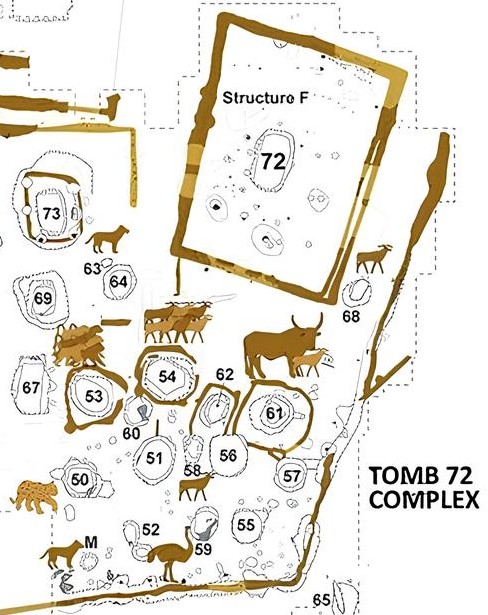 |
HK6 Tomb 50 contained the remains of a large male leopard.
 |
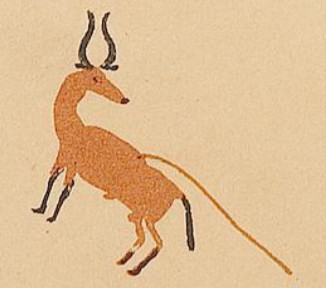 |
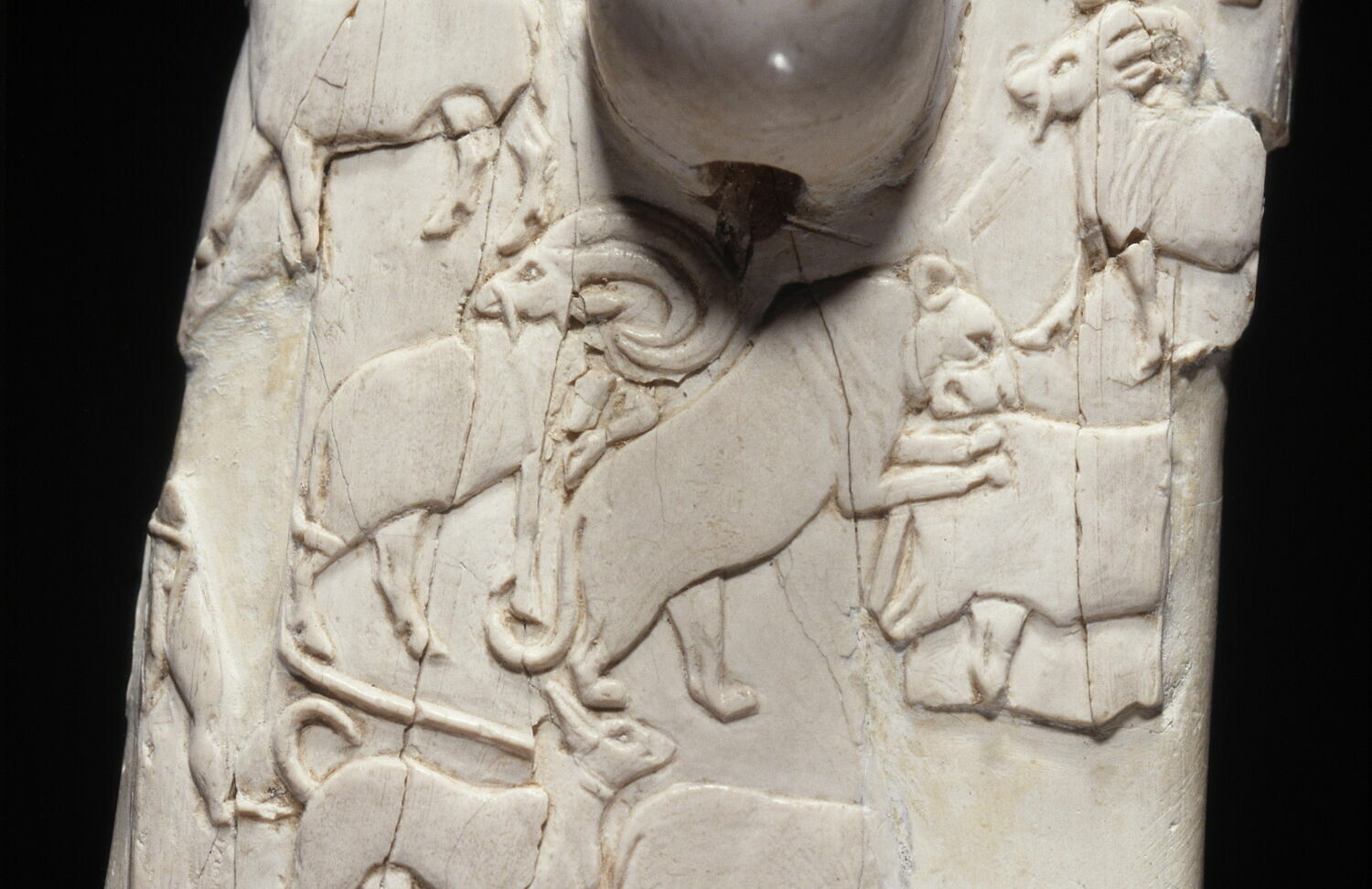
| Two horned animal looking back | Hartebeest looking back |
Gebel el-Arak Knife (back), Gebel el-Arak (?) |
Wall painting from Tomb 100 at Hierakonpolis |
HK6 Tomb 46 contained the disturbed remains of a human male as well as a concentration of bone from a gravid hartebeest. When an animal is restrained by a rope tied round one or more legs, long friction and excessive pressure on a leg can result in an inflammation of the bone where the rope sits. The effect of this is seen on a foot of the hartebeest in Tomb 46.
The remains of a hartebeest was found at HK29A (Ceremonial Center).
References:
https://digi.ub.uni-heidelberg.de/diglit/quibell1902bd2/0100/image,info
https://collections.louvre.fr/en/ark:/53355/cl010007467
https://www.academia.edu/38601584/Friedman_R_F_Van_Neer_W_De_Cupere_B_and_Droux_X_2017_The_elite_predynastic_cemetery_at_Hierakonpolis_HK6_2011_2015_Progress_report_with_Appendix_on_Demographic_Survey_by_Pieri_A_Dougherty_S_and_Antoine_D
April 4, 2025 Takahiko Nakagawa