|
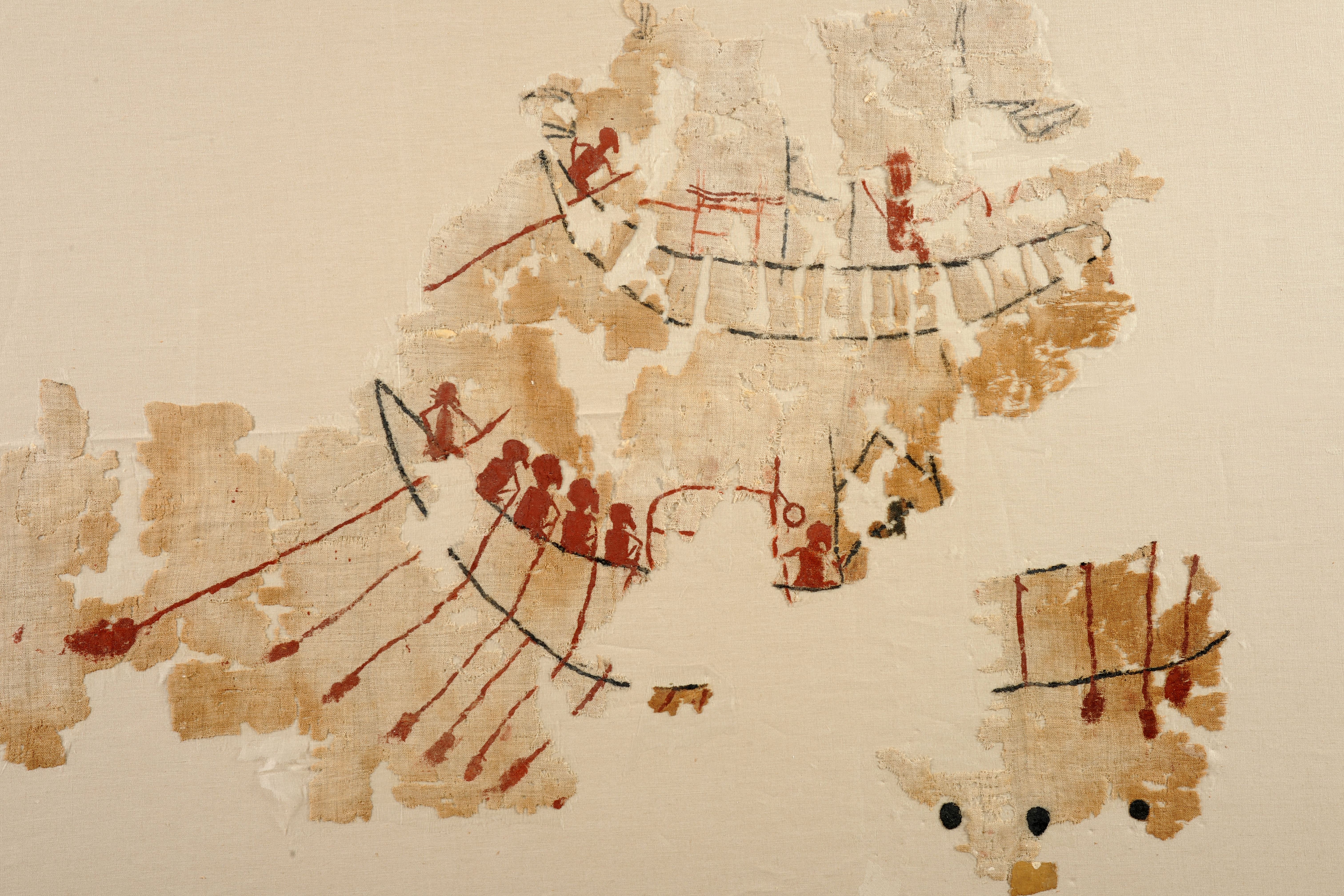
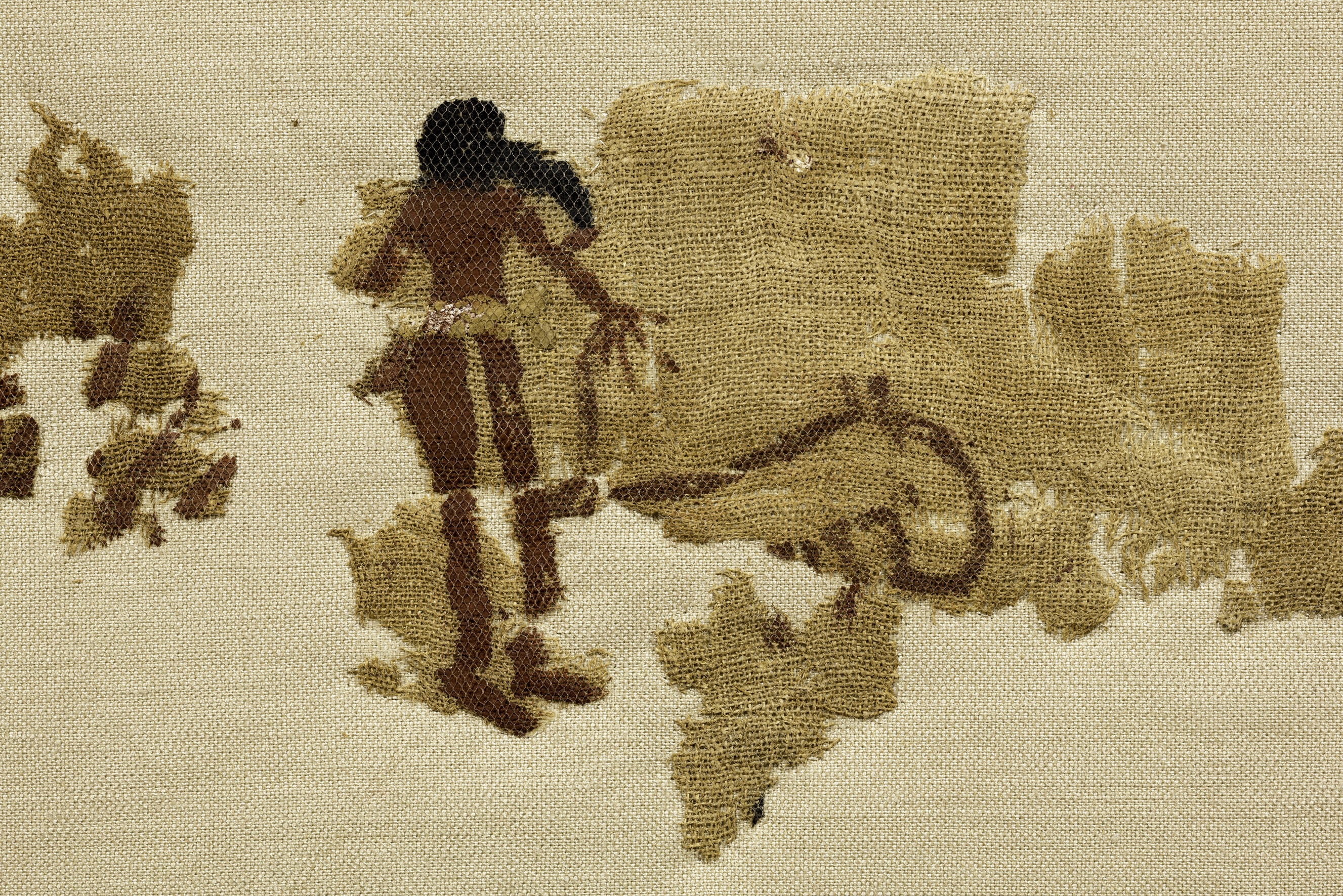
| Gebelein painted linen, Gebelein, ca. 3600 BC |
The center of HK29A (Ceremonial Center) at Hierakonpolis was composed in part of a walled, oval courtyard 45m long and 13m wide, on the south side of which was a monumental gateway framed by four enormous wooden pillars. Located roughly 50 meters north of HK29A, the scale of the remains at HK29B suggests that the palisade wall served as an impressive and formidable barrier.
Hieros (ἱερός): ancient Greek for "sacred" + Polis (πόλις): ancient Greek for "city"
The Achaean army went down to the sea with their fleet and clashed with warriors before the sacred city of Ilios.
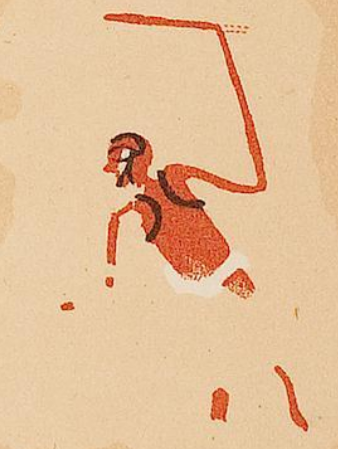 |
| An attacker holding up his stick |
Wall painting from Tomb 100 at Hierakonpolis, ca. 3500-3200 BC
The Iliad begins with the wrath of Achilles.
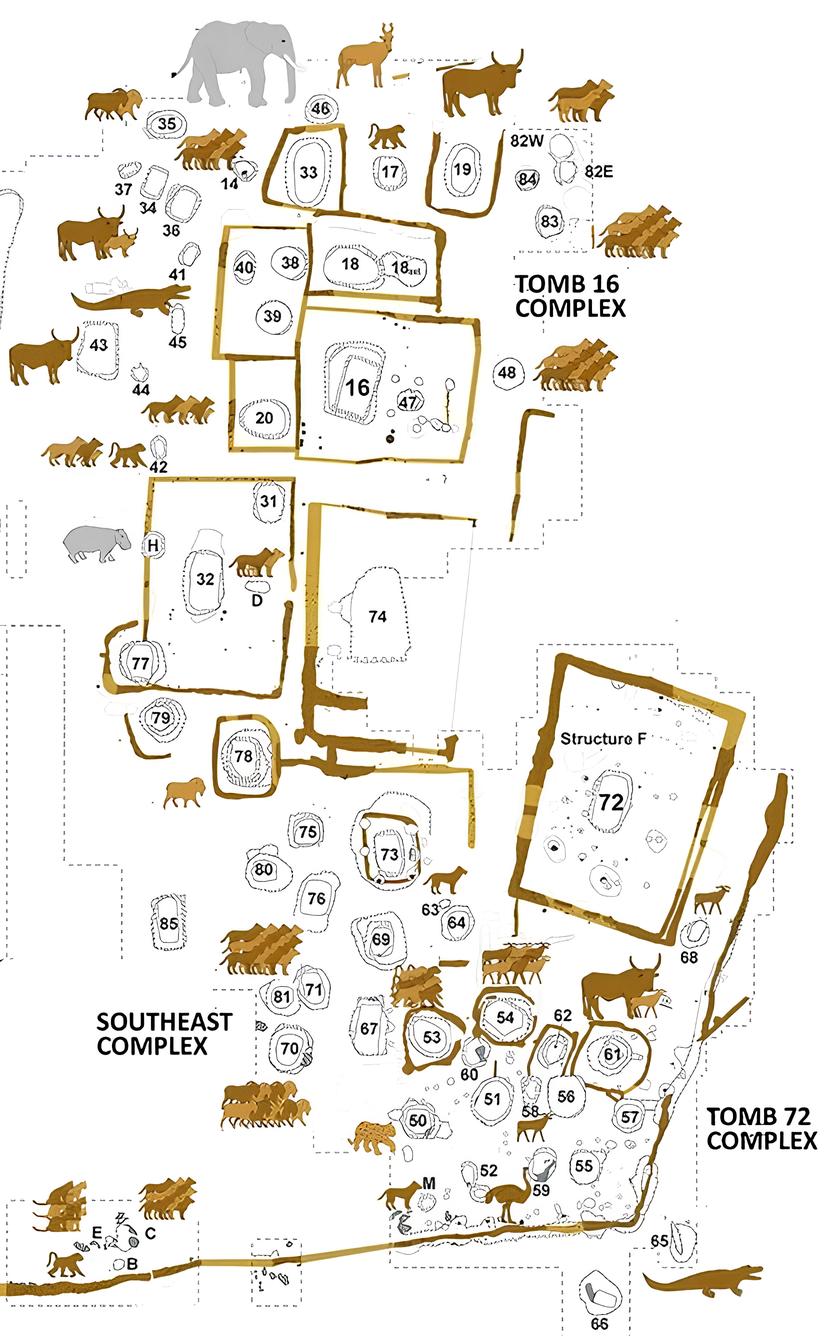 |
| Map of the central part of HK6 (the elite cemetery) at Hierakonpolis |
HK6 Tomb 72 is set within a large wooden structure (Structure F). The body of Tomb 72 owner was highly disturbed. Bones of a young person, 17-20 years of age, were found scattered in the upper fill and surrounding areas. Only some fingers and a part of the pelvis were found on the floor of the tomb. The almost complete removal of the human bones from the floor of the tomb, while many objects were left in place, suggests that the grave had been violated soon after the owner's death. This seems to have been an act of aggression against the tomb owner, rather than merely robbery. The wooden building above the tomb was then burnt down, along with other posts within Structure F.
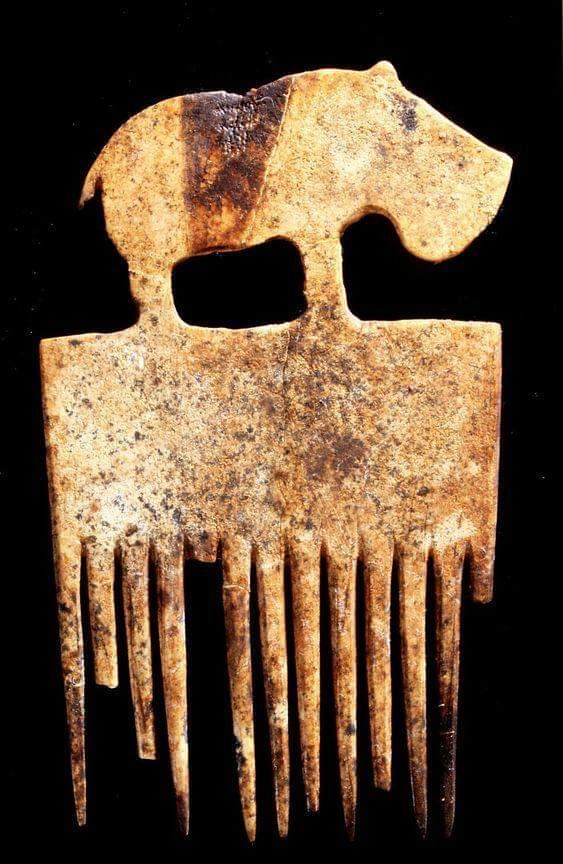 |
| "Hippo" comb from HK6 Tomb 72 |
A spot on the top of the hippo figure’s back seems to have been intentionally burnt. This comb was found just above the remains of the tomb owner’s pelvis.
 |
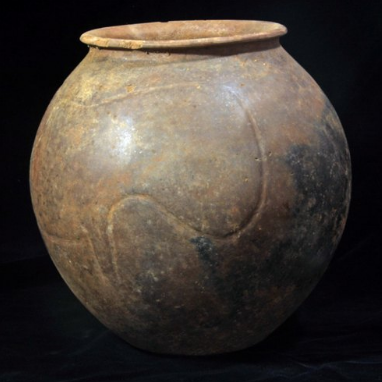 |
| A man standing with a leashed young hippo on Gebelein painted linen | Pot from HK6 Tomb 72 |
HK6 Tomb 72 is estimated to have been the last tomb around which a large-scale interment of many animals took place.
The Iliad concludes with a grand funeral for Hector the hippodamos, where his body was burned on a pyre and his remains were laid in an urn.
Hippos (ἵππος): ancient Greek for "horse" + Damaō (δαμάζω): ancient Greek for "to tame" / "taming"
HK6 Tomb 77 contained the highly disturbed remains of a robust man, aged between 35 and 50 years, who had a healed compress fracture on the front part of his skull.
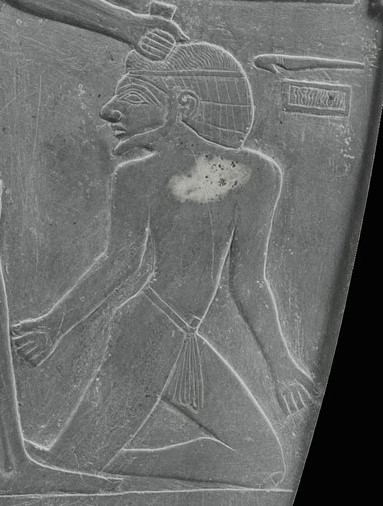 |
| Narmer Palette (recto) from "Main Deposit" at Hierakonpolis, ca. 3000 BC |
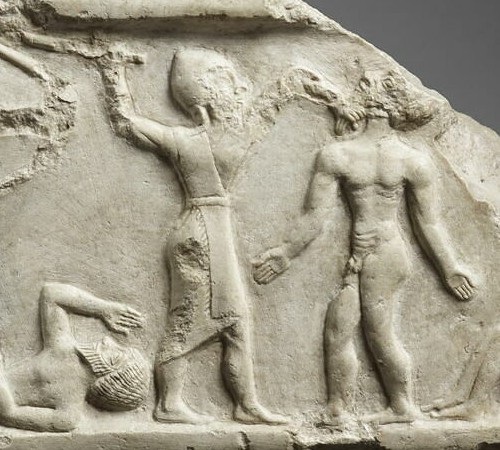 |
| Stele, Girsu, 2278-2270 BC |
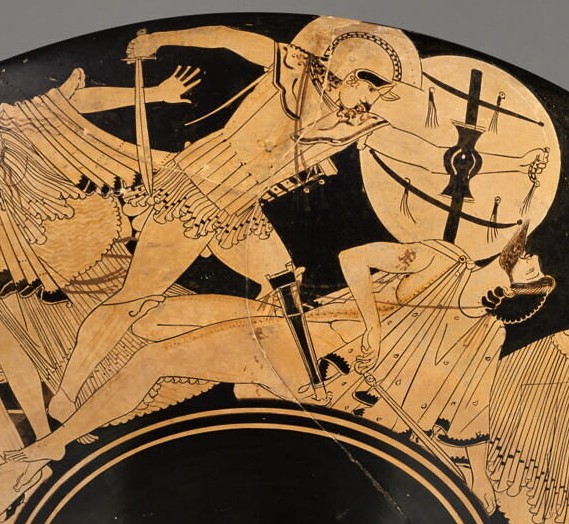 |
| Kylix, Athens (Place of origin), ca. 490 BC |
HK6 Tomb 47 is an oval-shaped grave located beneath the floor of the pillared chapel within the precinct of Tomb 16, one of the largest known from the Naqada IC–IIA period. The site yielded the remains of two female individuals.
Individual 1: The Tall Woman
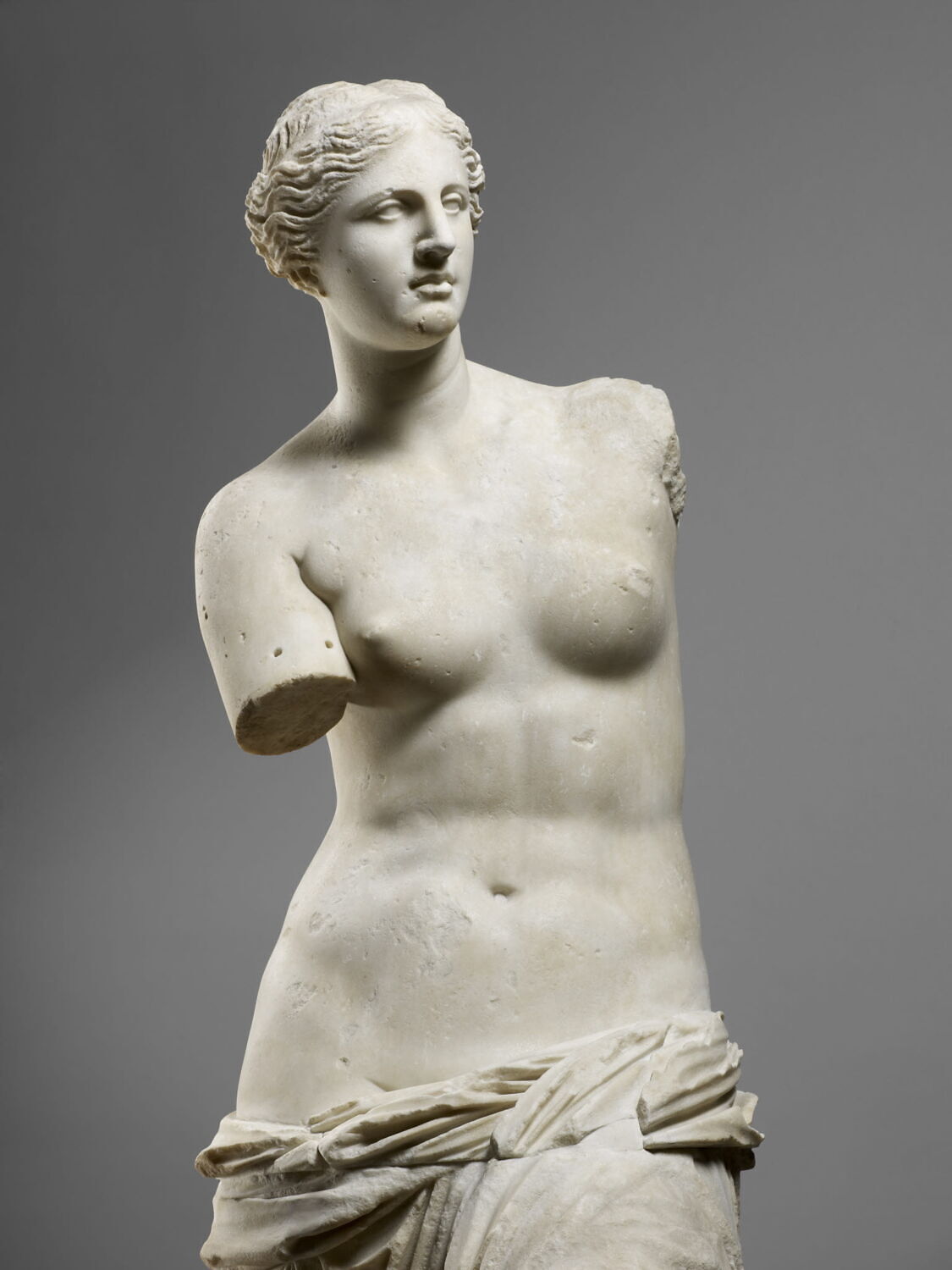 |
| Vénus de Milo, Mélos (Milo), 150-125 BC |
Individual 2: The Dwarf
In the duel, Paris was on the verge of death, but Aphrodite concealed him in a mist and whisked him away to safety.
Buried beneath the heap of the back-dirt, HK6 Tomb 79, although thoroughly plundered, contained the bones of a 25–35 year old male, as well as the skull of a large adult sheep with intentionally modified horns. Tomb 79 was enclosed by a roughly circular fence, of which only a portion of the foundation trench was found. Further excavation to the west toward Tomb 77 revealed a similarly shaped fence, suggesting the two tombs were contemporaneous.
References:
https://collezioni.museoegizio.it/en-GB/material/S_17138
https://digi.ub.uni-heidelberg.de/diglit/quibell1902bd2/0100/image,info
http://www.hierakonpolis-online.org/index.php/nekhen-news
https://egyptianmuseumcairo.eg/artefacts/narmer-palette-collection/
https://collections.louvre.fr/en/ark:/53355/cl010121766
https://collections.louvre.fr/en/ark:/53355/cl010270046
https://collections.louvre.fr/en/ark:/53355/cl010277627
June 6, 2026 Takahiko Nakagawa