|
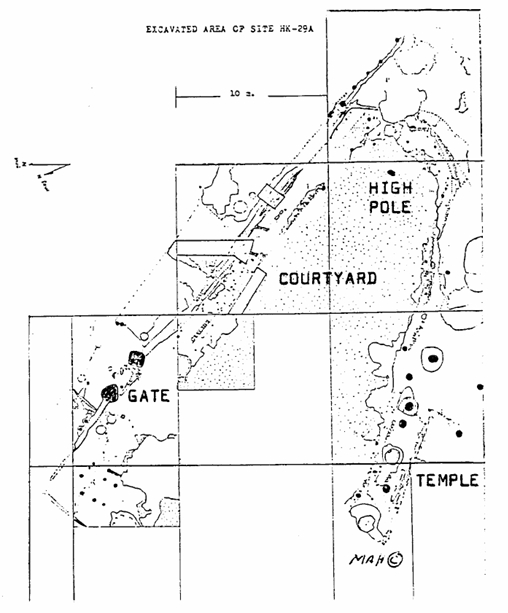
In use for over 500 year (Naqada IIA - Dynasty 1), the center of HK29A (Ceremonial Center) at Hierakonpolis underwent several renovations, and the structure was composed in part of a walled, oval courtyard 45m long and 13m wide, on the south side of which was a monumental gateway framed by four enormous wooden pillars of acacia wood and the eight smaller ones (arranged in 2 rows).
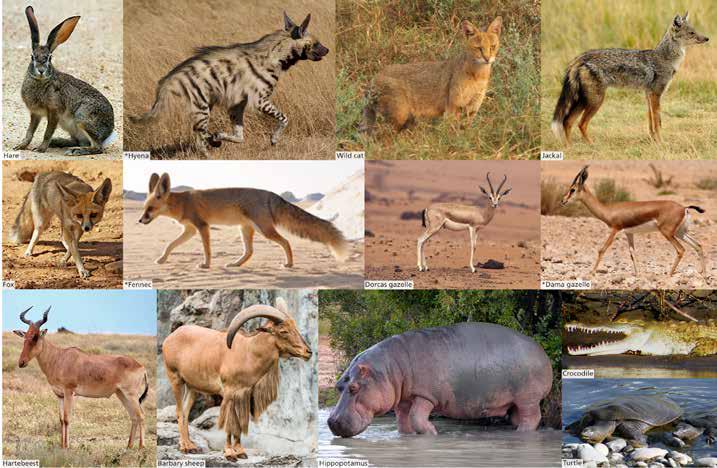 |
All of the wild animals found at the ceremonial centre at HK29A except the extinct aurochs, which is only represented by its horn cores.
At HK29A, around 15% of the faunal remains are from wild mammals compared to 1.6% at Hierakonpolis excluding HK29A. There are also a number of species not found in food refuse anywhere else: striped hyena, fennec, and dama gazelle (much larger than the common dorcas gazelle).
Together with the lithic evidence for butchery, the faunal assemblage—which contains the larger average size of cattle, young sheep and goat, and the Nile perch (up to 2 metres)— suggests that feasting took place here. However, the wide range of wild animals, including crocodile, hippopotamus, Barbary sheep and aurochs (which is only represented by its horn cores), implies something more than just fine dining. The significant number of aurochs horns observed at HK29A in early Naqada III deposits lends support for the ritual at this time.
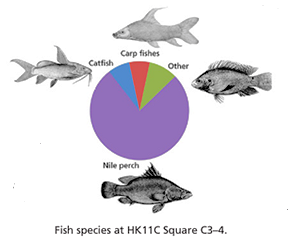
None of the faunal assemblages from elsewhere on the HK11 terrace have yielded remains suggesting that the prepared food was consumed by the community living there. It is only at the ceremonial centre at HK29A that numerous large Nile perch vertebrae have been recovered, indicating the consumption of prepared fish. The fish deliveries were coming from HK11C Square C3–4, since this would mean that after catching these large Nile perch, most more than a metre in length, and transporting them over a distance of about 2 km up the wadi to HK11C Square C3–4 for preparation, they were then taken to HK29A which is 1.8 km back in the direction of the Nile.
 |
 |
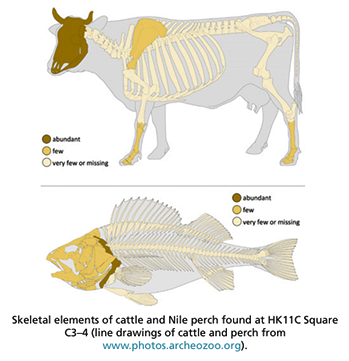 |
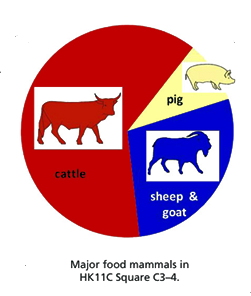
HK11C Square C3–4 is dated to the Naqada IIC-D period
HK11C Operation B comprises two occupational phases. Based on ceramic typology and supported by radiocarbon dating, the lower level is dated to the Naqada IC-IIB phase, while the upper level belongs to the Naqada IIC-D phase. The earliest phase of Operation B (Naqada IC-IIB) broadly coincides with the date of Tomb 16 (Naqada IC-IIA), the earliest large elite tomb in HK6.
The elite cemetery (HK6) at Hierakonpolis served as a burial ground restricted to the elite. The elite cemetery was in use in the Naqada IC-IIB period (3800-3650BC), but was abandoned in Naqada IIC-D (3600-3300BC). In the Naqada III period the elite cemetery (HK6) came into use again.
| Feature | Description |
|---|---|
| Dating | Based on ceramic evidence, the area at HK29B was in use from Naqada IIB-D. |
| Structural Features | The two phases of construction detected for the wood post wall at HK29B may correspond to periods of renovation at HK29A. Dozens of larger postholes were discovered, which could once have held large posts rising 6-7 m above ground. |
| Artifact Features | Ceramic assemblage includes unique special forms (e.g., black-topped beakers and matte red collared jars) also found at deposits in the complex surrounding Tomb 23 at the HK6 elite cemetery. A few sherds from HK29B were identified as Palestinian imports. |
| Feature | Description |
|---|---|
| Dating | HK25's lithic assemblage indicates food production activities, possibly for brewing, dating to Naqada IC-IIA . |
| Structural Features | The Naqada IIA-B monumental structure, identified as a columned hall, was built on a foundation of clean white sand. Analysis of hardened sand "tubes" suggests the structure was supported by organic posts or a reed-based roof/wall system. |
| Artifact Features | Burnt material of dozens of bifacial knives, arrowheads, mace heads, and "flint rings," dating to Naqada I-IIA, were recovered in four distinct circular clusters organized by type, suggesting a foundation deposit for the columned hall at HK25. |
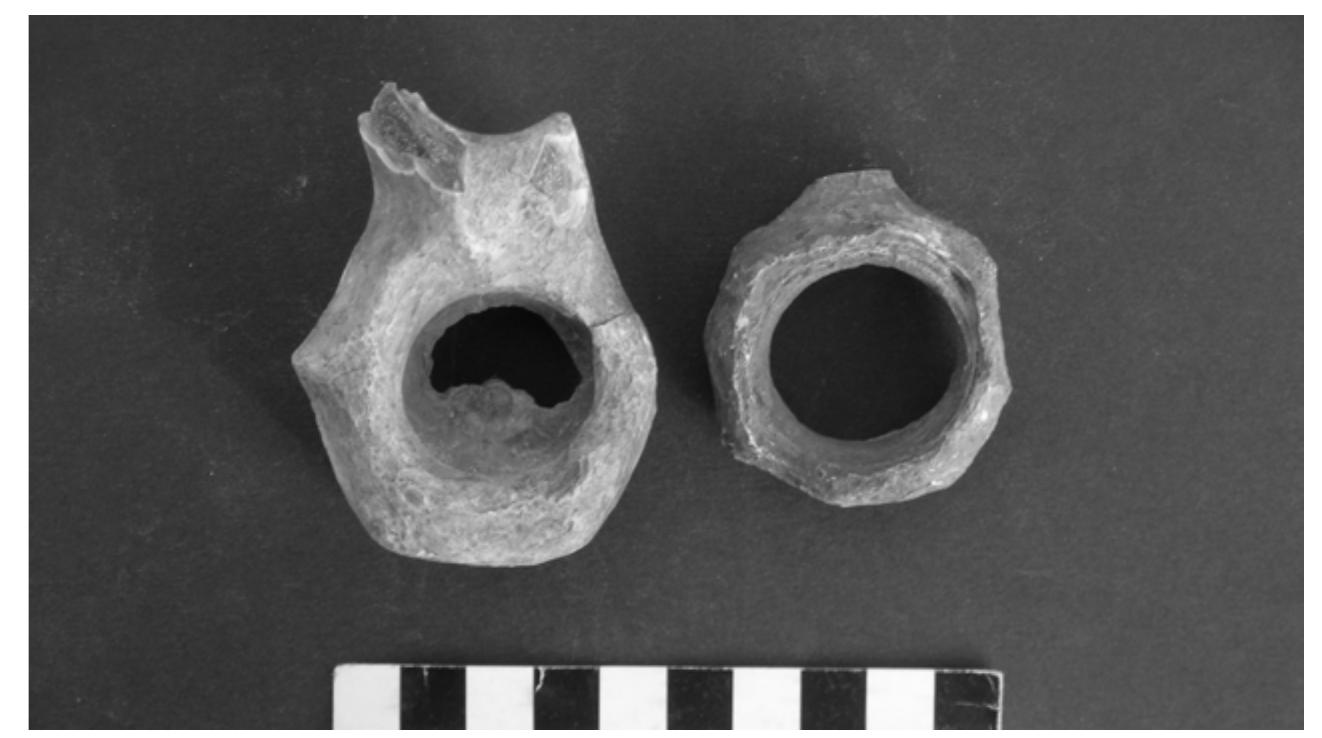 |
| Burnt "flint rings" from HK25 |
References:
http://www.hierakonpolis-online.org/index.php/nekhen-news
Hikade, T., 2011. Origins of monumental architecture: recent excavations at Hierakonpolis HK29B and HK25 [in:] Friedman, R.F. & Fiske, P.N. (eds.), Egypt at its Origins 3. Proceedings of the Third International Conference ‘Origins of the State. Predynastic and Early Dynastic Egypt. London, 27th July- 1st August 2008. Orientalia Lovaniensia Analecta 205. Peeters: Leuven: 81-107
November 24, 2025 Takahiko Nakagawa